





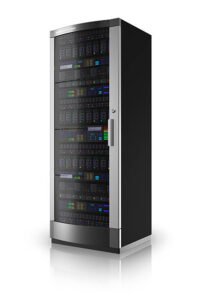



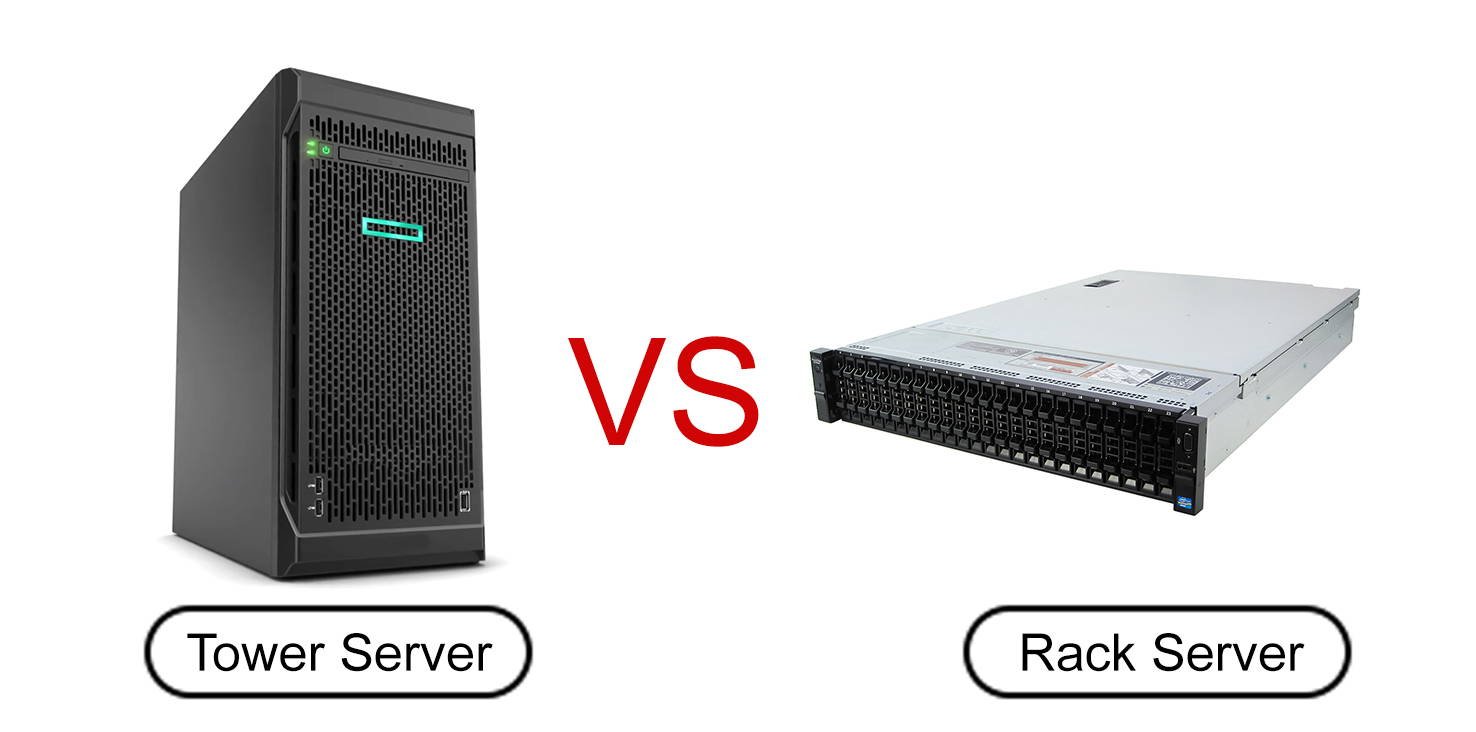
In Kenya, choosing between a Rack vs Tower Server comes down to space, scalability, and how fast your business is growing. Tower servers are simpler and cheaper for small offices, while rack servers are better for businesses that need multiple servers in a compact, managed setup.
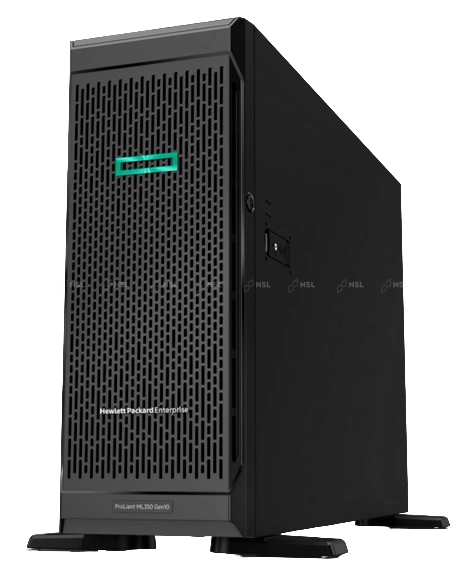
What Is a Tower Server?
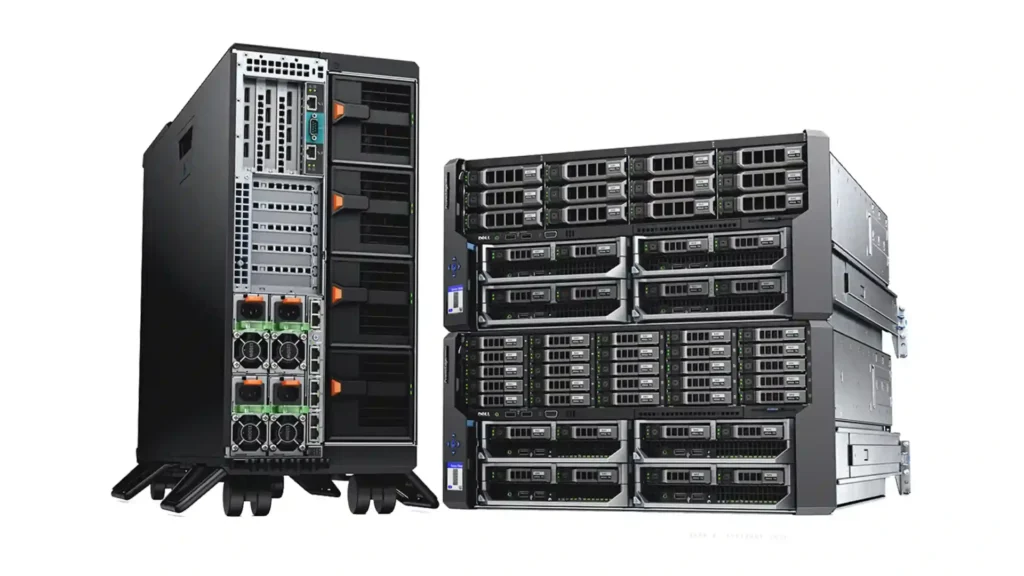
A tower server looks like a tall desktop PC and stands on its own. It’s designed for small offices, branch locations, or environments where you only need one or two machines.
Pros for Kenyan SMEs
- Lower upfront cost – no rack, UPS, or elaborate cooling required.
- Easy to set up – plug into power and network just like a PC.
- Quieter and cooler – suitable for shared office spaces or back rooms.
Cons
- Takes up floor space and becomes messy when you want several servers.
- Harder to scale – managing many standalone towers is clunky.
Best for:
Companies in Nairobi or other towns with limited dedicated server rooms
Small businesses, startups, clinics, and schools
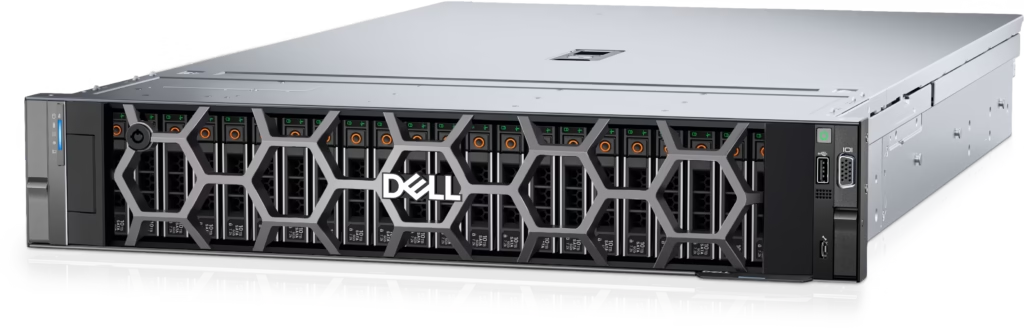
What Is a Rack Server?
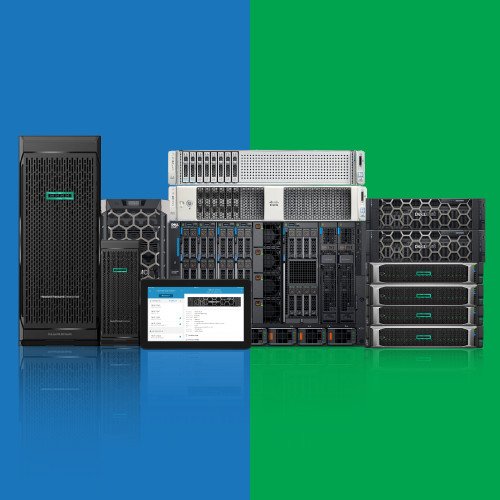
A rack server is a slim, box‑like unit that slides into a standard 19‑inch server rack (1U, 2U, 4U). It’s built for data centers and multi‑server environments.
Pros for Growing Businesses
- High density – you can fit many servers in a small footprint.
- Centralized management – many rack servers support remote administration (iLO, iDRAC, etc.), which is great for managed IT in Kenya.
- Easier to scale – add another server by sliding it into an open rack slot.
Cons
- Higher total cost – you need racks, UPS, PDUs, and better cooling.
- More noise and heat – needs a dedicated server room with proper ventilation.
Best for:
Businesses planning to add more servers or cloud‑like internal services
Medium‑ to large companies, data centers, ISPs, and SaaS providers
Key Differences at a Glance
| Feature | Tower Server | Rack Server |
|---|---|---|
| Form factor | Tall, PC‑like, standalone router-switch | Slim, mounts in 19‑inch rack router-switch+1 |
| Space needed | More floor space router-switch+1 | Compact, high‑density purestorage+1 |
| Setup complexity | Simple, plug‑and‑play router-switch | Needs rack, cabling, cooling router-switch+1 |
| Scalability | Limited to a few units router-switch | Easy to add many servers gpuservercase |
| Cost (overall) | Lower per unit router-switch+1 | Higher infrastructure cost serverstack+1 |
| Remote management | Limited built‑in tools router-switch | Strong remote tools standard router-switch+1 |
Which Should You Choose in Kenya (2026)?
Choose a Tower Server If:
- It’s a small business or startup with 1–2 servers.
- You have limited budget and no dedicated server room.
- In Nairobi, Mombasa, Kisumu, or a regional town and want simple, office‑friendly hardware.
Choose a Rack Server If:
You want centralized monitoring and remote management for IT teams or MSPs in Kenya.
You already have or plan a server room with cooling and UPS.
Expecting multiple servers (email, databases, web apps, backups) in the next 2–3 years.
Advice for Kenyan Businesses
- Start small, plan ahead: Many Kenyan SMEs begin with a tower server and later migrate to a rack‑based setup as they grow.
- Ask about local support: When buying from Nairobi‑based vendors, confirm on‑site support, warranty duration, and whether they offer rack‑installation services.
If you tell me your company size, number of users, and whether you have a server room, I can recommend a concrete “start here” architecture (e.g., “1 tower + 1 backup NAS” vs “4U rack with 2 servers”).
Lansotech Solutions,
Call/WhatsApp 0791-833-529 Start WhatsApp Chat>>
Visit us: Portal Place House, at the Muindi Mbingu/Banda Street Junction, 2nd Floor Shop 207,
website Click Here>>











 ASUS
ASUS